

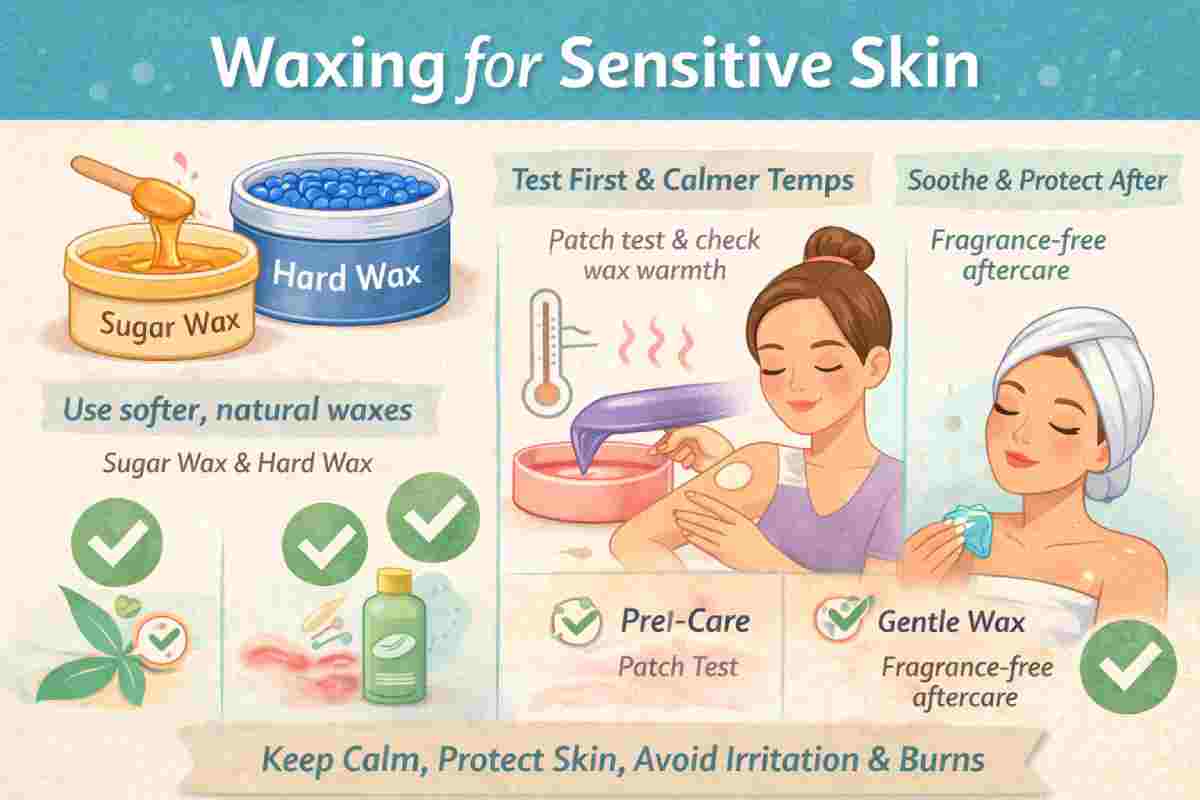
Waxing leaves you skin smooth and clean for several weeks at a time but can be a little difficult with sensitive skin. Raised spots, redness, rashes or even mild burning can occur, as the skin is not accustomed to the heat and friction or even harsh chemicals.
This does not mean you can’t wax it; however you do need to take extra special care of sensitive skin when waxing. The key difference for people with sensitive skin between a fantastic waxing experience and an unpleasant one is based largely upon product choice, preparation, and the aftercare received.
Table of Contents
What is waxing for sensitive skin?
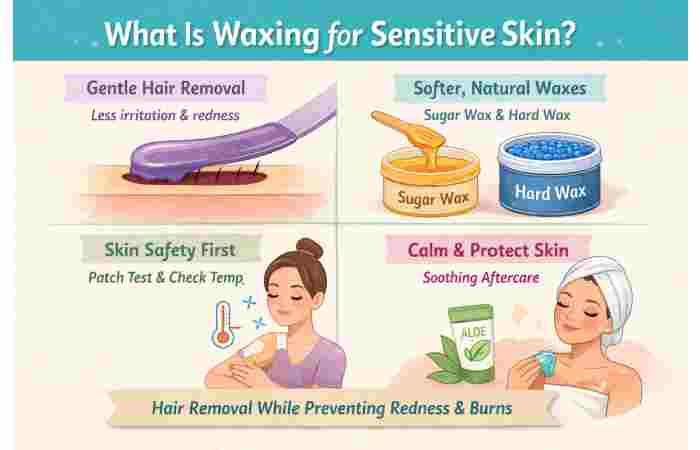
Waxing sensitive skin has to be done gently. Sensitive skin reacts to heat, chemical agents, fragrance, firm pulling and friction, which is why it is so important that hair is removed in the least provoking way possible. Thus, temperature, wax type, and method of removal as well as after care are very important.
The intent of this service is not only to remove unwanted hair. It’s to remove unwanted hair and maintain the health and skin integrity by preventing redness, bumps, inflammation, and burning.
Why Sensitive Skin Reacts to Waxing
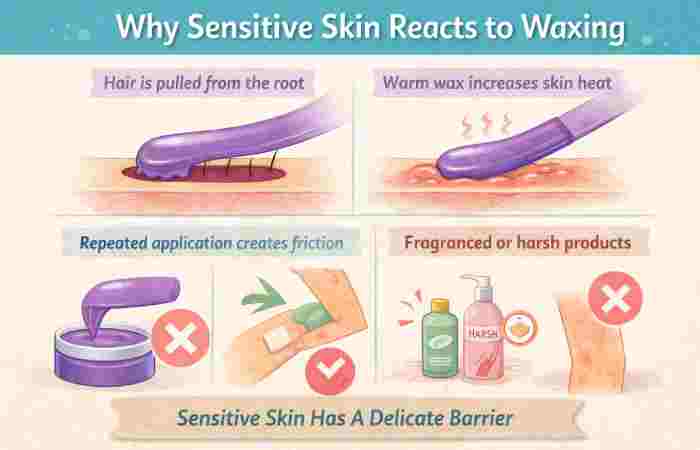
Sensitive skin usually has a weaker or more reactive skin barrier. This means it can lose moisture faster and respond strongly to outside triggers. Waxing can cause temporary stress to the skin because:
- The hair is pulled from the root
- Warm wax can increase heat on the skin
- Repeated application can create friction
- Scented and or irritant products applied to the area.
- Poor aftercare can result in the pores getting blocked,
- Causing inflammation or sensitivity.
To a degree, reddening is unavoidable but should it persist to be stingly, burning or itchy with an outbreak of spots, the issue may be sensitivity.
What’s the best method of waxing for you?
Waxing methods and how best to select what’s right for you are below.
| Waxing Method | Best For | Sensitivity Level | Pros | Possible Drawbacks |
| Hard Wax | Face, underarms, bikini line | Low to medium irritation | Grips hair more than skin, usually gentler | Can be more expensive |
| Soft Wax | Arms, legs, larger areas | Medium irritation | Covers large areas quickly | May pull more on delicate skin |
| Sugar Waxing | Sensitive and dry skin | Often gentler | Natural feel, easier cleanup, less sticky | Technique matters a lot |
| Roll-On Wax | Legs and arms | Medium irritation | Easy and even application | Not always ideal for very reactive skin |
| Cold Wax Strips | Quick touch-ups | Higher irritation for some | Convenient and simple | Can be harsh on sensitive skin |
It can be better to start with a softer type of wax, hard wax or sugar waxing if your skin is highly sensitive than a strong soft wax.
How to prepare sensitive skin before waxing

A good prep will do so much in terms of the outcome too. The skin must be clean, calm and not layered with tonnes of products prior to the wax.
1. Cease exfoliation a while before the wax
Too much scrubbing or applying of acids prior to your wax could result in extremely sensitive skin and a possible reaction. That’s why you have to give up exfoliation just prior to your appointment.
2. Do not use heavy creams or oils on the skin on that day
Dirty greasy lotion/oil or suntan lotion on the skin could possibly make the wax slip so ensure the skin is clean prior to wax application.
3. Check the temperature of the wax.
Wax at high temperatures can burn the skin. Apply on a small patch of skin to test the temperature.
4. Ensure adequate hair length
The skin is tugged on too many times when the hair is too short, resulting in a very painful waxing process. Overly long hair would make the experience not so pleasurable as well. Quarter-inch is typically the perfect length to wax from.
5. Conduct a test patch
Absolutely essential if you have sensitive skin. You will need to apply a small patch of the wax to the skin at least twenty-four hours prior to the waxing.
6. Avoid waxing on irritated skin
If you have a sunburn, rash, cut, or active acne on your skin, wait until it has had time to settle.
Best Pre-Wax Care Routine
| Time Before Waxing | What to Do | Why It Helps |
| 24–48 hours before | Light exfoliation if tolerated | Helps prevent ingrown hairs |
| 24 hours before | Patch test a new wax or product | Checks for reactions |
| A few hours before | Clean the area gently | Removes oil and sweat |
| Day of waxing | Wear loose clothing | Reduces friction afterward |
| Just before waxing | Keep skin dry and product-free | Improves wax grip and lowers irritation |
Tips to Avoid Rashes & Burns During Waxing
Issues arise when waxing in a hurry. Moving slowly can prevent sensitive skin from getting damaged.
1. Wax should not be too hot
Heat is one of the largest contributing factors in wax related pain. Wax should be warm, but not hot, and you should not feel pain when it is applied to the wrist, as it is already too hot for your skin.
2. Apply wax with hair growth
When applied with hair growth, wax can grip hair more effectively. This can decrease pulling on the skin.
3. Strip wax at a faster pace
Slow and controlled removals tend to hurt more and cause more damage. Faster removal is generally better.
4. Do not over-wax
Over-waxing a single area may cause burning and redness. It is sometimes better to do a quick clean-up after some hair has already been removed, rather than continue the painful stripping process.
5. Keep skin taut while pulling strip
Slight tension can help smooth removal and decrease tugging of skin.
6. Stick to unscented products
While scented products might be a nice extra, they tend to be the most irritant for the skin.
Product Suggestions for Sensitive Skin
Here are the kinds of products that usually work best when the skin is reactive. These are suggestion types, not strict rules.
| Product Type | What to Look For | Why It Helps Sensitive Skin |
| Gentle Hard Wax | Fragrance-free, low-temperature melt | Less pull on the skin |
| Sugar Wax | Short ingredient list, natural humectants | Often feels milder and easier to remove |
| Pre-Wax Cleanser | Alcohol-free, non-drying | Cleans skin without stripping it |
| Post-Wax Gel | Aloe vera, panthenol, calendula | Soothes redness and cooling discomfort |
| Ingrown Hair Serum | Salicylic acid in a mild formula or lactic acid | Helps prevent bumps after healing |
| Fragrance-Free Moisturizer | Ceramides, glycerin, hyaluronic acid | Restores moisture barrier |
Common Mistakes to Avoid
Even a tiny slip up can turn what should be a simple waxing appointment into a painful affair. Most issues people have with sensitive skin and waxing result from something of the following.
Too soon after a scrub
Areas of the skin that have recently been exfoliated with acids can be very reactive to waxing.
The wax was too hot
This actually results in a burn, not just irritation, of the skin.
Over dry or irritated skin
The skin barrier has been compromised or is already inflamed. The waxing then adds more trauma to the skin.
Applying too many products afterward
Strong chemicals in perfume or face creams could cause a reaction on newly waxed skin, or overly thick occlusive creams could clog pores.
Tight clothing straight after waxing
Wearing tight fabrics on freshly waxed skin will cause further heat and friction on the area which will result in even more inflammation.
Touching the skin with dirty hands
Post-Wax Care for Sensitive Skin
1. After care of sensitive skin
You will also need to maintain a routine similar to this post wax. Post wax aftercare consists of cooling the skin, moisturising and preventing any further irritation.
2. Cool down
Use a clean compress that has been chilled (do not apply ice directly onto skin).2. Soothe the skin
Your skin may feel calmed with the use of aloe vera, chamomile, calendula, oats and panthenol.
3. Avoid heat
Steaming, steam rooms, hot water baths and even exercising should be avoided for 24 hours as to not cause irritation.
4. Avoid perfumed and acid based products
It is not appropriate to use any retinol, glycolic acid or salicylic acid or perfumed products at the time.
5. Wear comfortable clothing
When treatment of the bikini area, armpits or legs, wear comfortable clothes will prevent that skin does not rub.
6. Apply moisturizer (after calming down the irritation)
Once irritation subsided, lightly-scented, fragrance-free moisturizer can be used.
Best Post-Wax Care Routine
| Time After Waxing | What to Do | What to Avoid |
| Immediately after | Apply a soothing gel or cool compress | Scrubbing or rubbing |
| First 24 hours | Keep the area cool and clean | Hot showers, workouts, sun exposure |
| 24–48 hours later | Use a mild moisturizer | Fragrance, acids, retinol |
| After 2–3 days | Begin gentle exfoliation if skin is calm | Harsh scrubs |
How to Treat Mild Rashes or Redness
Any mild reddening can also clear on its own. If you experience itchy or bumpy skin, you can do the following to help it recover:
- Apply aloe vera gel or a soothing moisturizer
- Keep the area dry and cool.
- Resist the temptation to scratch or peel your skin.
- Do not apply makeup, deodorant, or a heavy moisturizer if your skin is particularly sensitive after waxing.
- Ensure you allow time for the skin to recover before your next waxing treatment.
If skin burns severely, blisters or has developed a rash, cease using the product and seek medical advice.
Who Should Be Extra Careful?
Some people are more likely to react to waxing and should take extra precautions.
| Skin Situation | Extra Caution Needed? | Suggested Approach |
| Very dry skin | Yes | Use moisturizing pre/post care |
| Eczema-prone skin | Yes | Patch test and avoid waxing during flare-ups |
| Acne-prone skin | Yes | Avoid active breakouts |
| Recently tanned skin | Yes | Wait until skin heals |
| Skin with cuts or burns | Yes | Do not wax until healed |
| Fragrance-sensitive skin | Yes | Choose fragrance-free products |
When Waxing May Not Be the Best Option
Sometimes the skin simply needs a break. Waxing may not be a good idea if you have:
- Active rashes
- Sunburn
- Open cuts or wounds
- Severe eczema flare-ups
- Recent peeling from chemical treatments
- A history of strong allergic reactions to wax products
If this is so, it is probably wiser to wait it out and possibly use an alternative form of hair removal, after a discussion with your hair remover.
Final Thought
This does not, however, suggest that those with sensitive skin have to go through the excruciating pain and sheer guesswork involved in traditional waxing. This simply implies that you will have to learn to work with your skin rather than against it. You will have to use a sensitive wax; you will have to pay close attention to the temperature; you will have to employ some kind of pre-wax application, and you must have an after wax formulation available.