

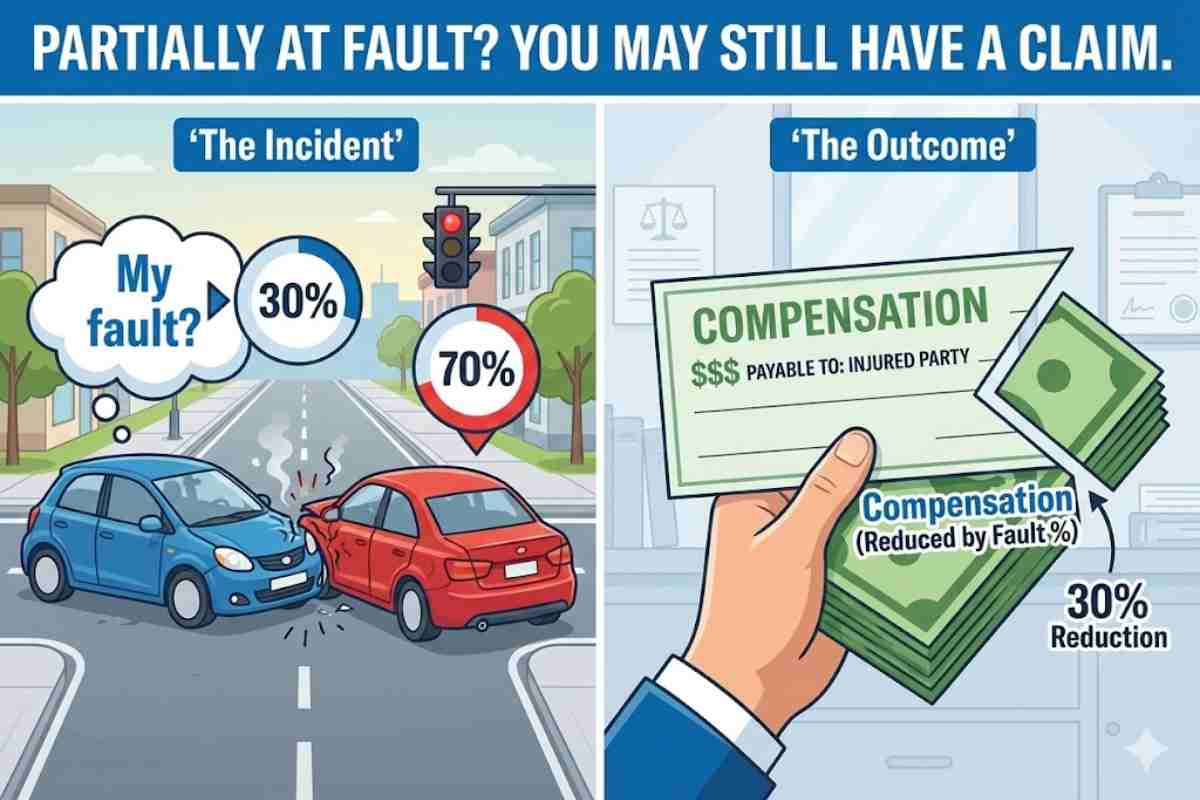
After an accident, many people assume they can’t recover compensation if they were even slightly responsible. This belief often stops injured individuals from pursuing valid claims. The reality is more nuanced. In many situations, you may still have the right to seek damages—even if you were partially at fault. Speaking with a qualified legal professional early on can help clarify your options, and a Scranton personal injury lawyer can explain how fault is evaluated in your specific situation.
Table of Contents
Understanding Partial Fault in Personal Injury Cases
Partial fault means that more than one party contributed to the accident. For example, you might have been driving slightly over the speed limit when another driver ran a red light. In this scenario, both parties may share responsibility for the crash.
Personal injury law recognizes that accidents are rarely black and white. Instead of denying compensation outright, many states use systems that assign percentages of fault to each party involved. Your ability to recover damages depends largely on which system applies and how fault is allocated.
Comparative Negligence Explained
Most states follow some form of comparative negligence. Under this approach, your compensation is reduced by your percentage of fault rather than eliminated entirely.
Pure Comparative Negligence
In a pure comparative negligence state, you can recover damages no matter how high your share of fault is. Even if you were 90% responsible, you could still recover 10% of your total damages. While the recovery may be limited, it ensures that injured individuals aren’t completely barred from compensation.
Modified Comparative Negligence
Modified comparative negligence is more common. Under this system, you can recover compensation only if your share of fault is below a certain threshold—typically 50% or 51%. If you are found equally or more responsible than the other party, you may be unable to recover damages.
Understanding which standard applies to your case is critical, as it directly affects whether filing a claim makes sense.
How Contributory Negligence Differs
A small number of states still follow contributory negligence rules. Under this strict standard, being even 1% at fault can prevent you from recovering any compensation. While this approach is less common today, it underscores why legal guidance is so important. Knowing the governing law can mean the difference between a successful claim and a denied one.
Determining Fault After an Accident
Fault is not determined by one factor alone. Insurance companies, investigators, and courts review a range of evidence, including:
- Police accident reports
- Photos and videos from the scene
- Witness statements
- Traffic laws or safety regulations
- Expert testimony, when necessary
Because fault determinations can be subjective, insurers may attempt to assign you a higher percentage of blame to reduce their payout. This makes documentation and early advocacy especially important.
Why You Should Still Consider Filing a Claim
Even if you believe you were partially at fault, filing a claim can still be worthwhile. Medical bills, lost income, property damage, and pain and suffering can add up quickly. Partial compensation may still significantly offset these losses.
Additionally, initial assumptions about fault are often inaccurate. After a full investigation, you may be assigned less responsibility than you expect—or none at all. By filing a claim, you preserve your rights while the facts are evaluated.
Insurance Companies and Shared Fault
Insurance adjusters are trained to minimize payouts. When partial fault is involved, they may push aggressively to shift blame onto you. Statements made early on, especially without legal guidance, can be used to increase your percentage of fault.
It’s important to be cautious when giving recorded statements or accepting early settlement offers. What seems like a fair offer initially may not reflect the true value of your claim once long-term medical needs and lost earning capacity are considered.
The Role of Evidence in Reducing Your Fault Percentage
Strong evidence can significantly reduce the percentage of fault assigned to you. For example, surveillance footage might show another driver’s reckless behavior, or expert analysis could demonstrate that road conditions played a role. The more comprehensive the evidence, the better positioned you are to challenge unfair fault assessments.
Time Limits Still Apply
Even when partial fault is involved, strict deadlines—known as statutes of limitations—still apply. Waiting too long to act can result in losing your right to file a claim altogether, regardless of fault. Acting promptly ensures evidence is preserved and deadlines are met.
Final Thoughts on Partial Fault Claims
Being partially at fault for an accident does not automatically prevent you from seeking compensation. Modern personal injury laws are designed to account for shared responsibility, allowing many injured individuals to recover damages proportionate to the other party’s fault.
The key is understanding how fault is determined, how it affects your potential recovery, and how to protect yourself during the claims process. With the right approach and proper guidance, you can make informed decisions and pursue the compensation you deserve—even when fault is shared.