

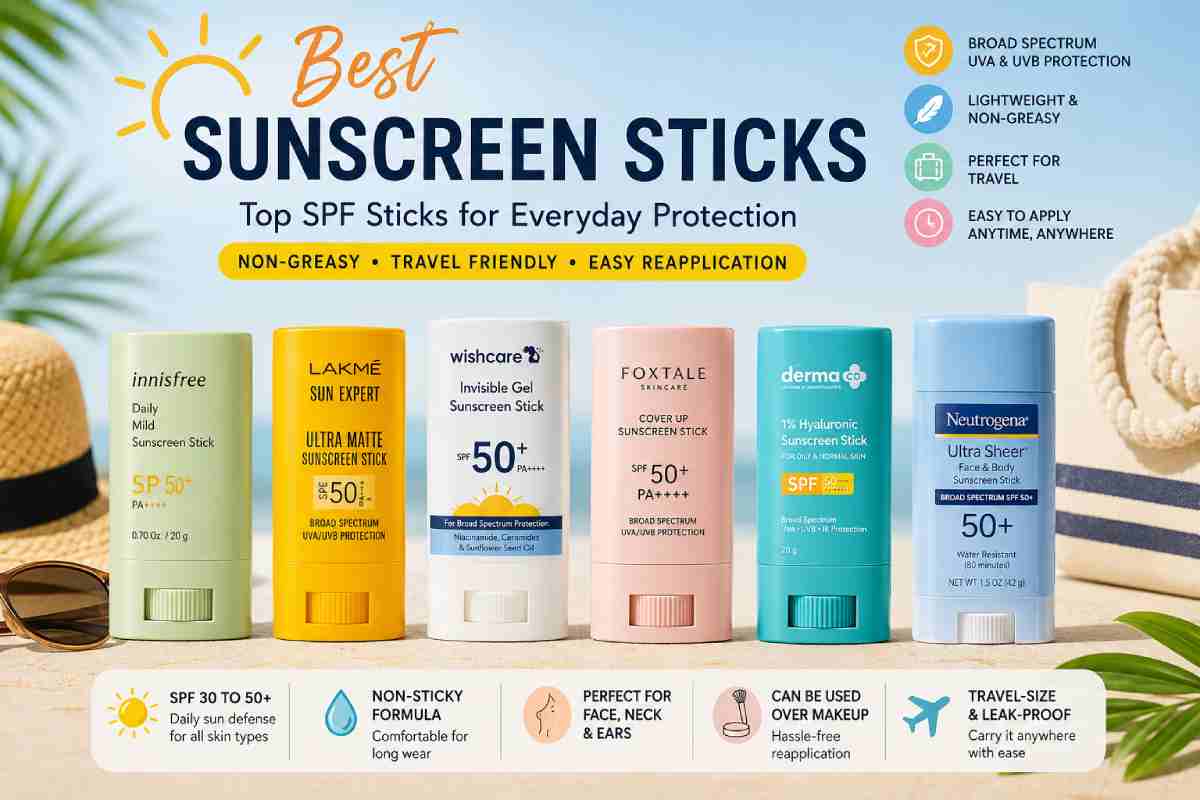
Sunscreen sticks are the sneaky hero in easy skin wins. Not only are they mess-free but the stick application can’t be beat for quick touch-ups throughout a hectic day, long trip, post-workout routine, or outdoor excursion. Rather than reaching for an open tub of product and greasy fingers to apply, the stick can swipe directly onto skin making the whole process speedy and seamless.
In 2026 the top sunscreen sticks deliver far more than UV protection and can include weightless feel, no greasy finish, makeup compatibility, and slim design that slips perfectly into your pocket or purse. All of these features are just what commuters, students, travelers, athletes, and any others who want worry-free SPF.
Table of Contents
What Is a Sunscreen Stick?
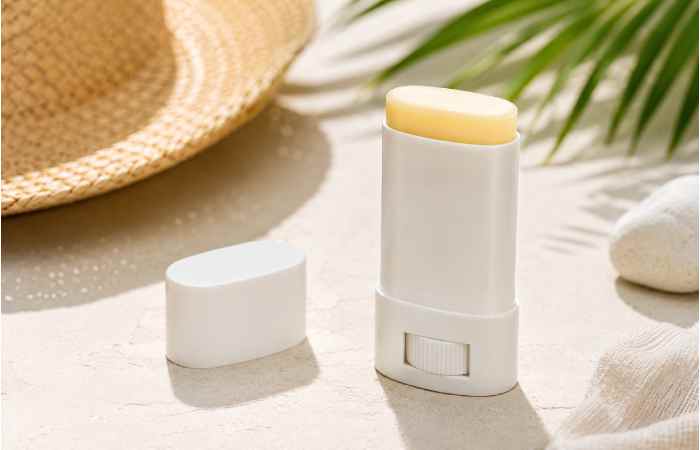
Sunscreen stick refers to the application of sunscreen in solid form like a balm or a deodorant stick. This type of sunscreen application can be used by simply dabbing the stick onto the skin and then swiping it all over the face, neck, ears and other skin surface areas that is exposed to the sun.
- It is especially useful because:
- It’s easy to put on without touching with your fingers,
- less likely to drip,
- and easy to reapply.
And also tucked away in a bag, purse or backpack. For most of us, it’s not a substitution, but a logical addition to our sunscreen routine. While I still prefer cream sunscreen for my whole body, stick is a lifesaver for spot treatments or reapplying throughout the day.
Why Sunscreen Sticks Are So Popular in 2026
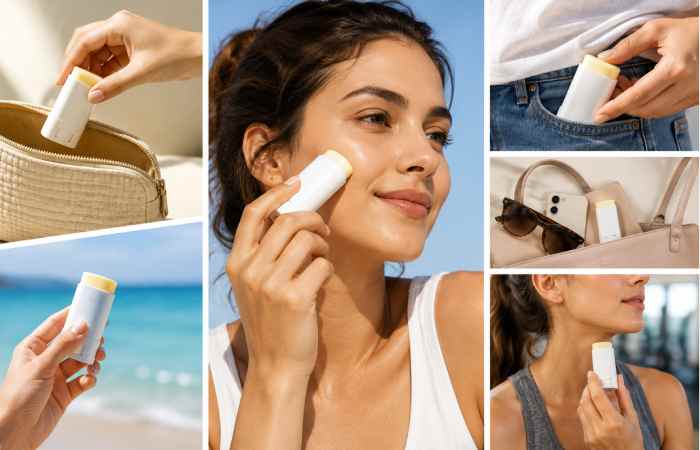
The one nice thing about sunscreen sticks? They are really portable! For people who have trouble with how to reapply sunscreen without making it a huge mess, the sunscreen stick comes in handy.
Here is why they are trending:
- They are travel-friendly and compact.
- They do not leak like lotions or sprays.
- Convenient to use on the go.
- Good for specific spots like the nose, cheeks, forehead, lips and ears.
- Often can be less oily than liquid sunscreen
This is ideal for anyone who is out of the house a lot, travels on public transport or works long hours. It’s also a convenient and compact protection which can be stored in a pocket for immediate use.
SPF Guide: How to Choose the Right Protection
What’s SPF? It’s an abbreviation. It’s the short for Sun Protection Factor. SPF shows how long your skin will be protected from the harmful rays that cause you to burn: UVB.
Here is a simple guide:
| SPF Level | Protection Level | Best For |
| SPF 15 | Ordinary defense | Shorter indoor to outdoor transit |
| SPF 30 | Daily protection in fine. | For day to day wear, commutes, short trips out. |
| SPF 50 | Excellent security | Working outdoors, traveling, hot weather, extended sun exposure |
| SPF 50+ | Greater protection | Beach, sports, day light |
A practical rule:
For many people SP F 30-SPF 50 is the best compromise.
If you’re going to be outside for extended periods then SPF 50 is best.
Also look for:
- Wide spectrum: works to protect from both UV A and B rays.
- Water resistant: a good choice if you are a very sweaty person or around water.
- Non-comedogenic: ideal if you have an oily and/or acne-prone complexion.
- Fragrance free: good if you have sensitive skin.
Comparison Table: What Makes a Good Sunscreen Stick?
If you examine the packaging of a sunscreen stick, you can find out what kind of stick you are getting. The chart below should help you with it.
| Feature | Why It Matters | Best Choice |
| SPF 30–50 | Daily and outdoor sun protection | SPF 50 for better protection |
| Broad-spectrum | Screens against UVA and UVB rays | Must-have |
| Non-greasy texture | Comfortable to wear on skin. | Hot weather clothing |
| Water resistance | Sweat-proof and moisture-proof. | Vital for trips and sports |
| Clear finish | No white cast | All skin tones look good. |
| Compact size | Carryable everywhere | ideal for pockets, handbags. |
| Skin-friendly formula | Soothes irritation | Suitable for sensitive skin |
Top Sunscreen Sticks in 2026 to Consider: What To Look For
Forget attractive packaging-we’re reviewing the way a sunscreen stick actually works. Usually, a quality one has:
1. Non-greasy finish
The best sunscreen sticks feel weightless and aren’t greasy. The product itself should glide onto the skin and not leave a shiny finish.
2. Travel-friendly packaging
The small stick is ideal to be carried around to work, in travel and work bags or just in gym pouches or in your every day commute as being a solid form of sunscreen it’s much easier to carry compared to a liquid one.
3. Easy reapplication
There is so much that a stick can achieve, but a stick should be simple. One should be able to glide it over makeup or bare skin without smudging every bit that is on your face.
4. Strong SPF protection
An appropriate stick should also fulfill the primary function of protecting your skin. An SPF of 30 will be suitable for general use; an SPF of 50 is recommended if you spend an increased amount of time outdoors.
5. Suitable for your skin type
- Oily skin: matte stick or oil-free stick
- Dry skin: stick with hydrating ingredients
- Sensitive skin: fragrance-free stick and gentle stick
- Acne skin: stick with non-comedogenic ingredients
Comparison Table: Best Sunscreen Stick Types by Skin Need
| Skin Need | Best Stick Type | Why It Works |
| Oily skin | Matte, oil-free stick | Helps reduce shine |
| Dry skin | Moisturizing stick | Prevents tightness and flaking |
| Sensitive skin | Fragrance-free stick | Lowers irritation risk |
| Acne-prone skin | Non-comedogenic stick | Less likely to clog pores |
| Travel use | Compact high-SPF stick | Easy to carry and reapply |
| Sports/outdoors | Water-resistant stick | Better during sweat and heat |
Using a Sunscreen Stick properly
While sunscreen sticks are extremely portable, they need to be applied in the right way to receive the optimum advantage
Step 1: Apply enough product
Many people swipe too lightly. For proper protection, use several even passes across each area.
Step 2: Cover exposed zones carefully
Focus on:
- forehead
- cheeks
- nose
- ears
- neck
- hairline
- around the eyes, carefully
Step 3: Reapply regularly
Re apply every 2 hours of exposure when outside. More frequently than this should be reapplied after swimming, or any extended periods of excessive perspiration, according to instructions as regards to the water-resistant factor of the formula.
Step 4: Use it on clean or lightly moisturised skin
For best glide, apply the stick after skincare and before heavy sweating. It can also be used over makeup for touch-ups.
Step 5: Don’t neglect small areas.
The back of your neck, sides of your nose, and your ears are easy to forget and also prone to burning easily.
Step 5. Sunscreen Stick vs Sunscreen Lotion
Both formats have their place. The right one depends on your routine.
| Feature | Sunscreen Stick | Sunscreen Lotion |
| Portability | Excellent | Moderate |
| Mess-free use | Very good | Can be messy |
| Full-body application | Not ideal | Best choice |
| Reapplication | Very easy | Easy but less convenient |
| Travel use | Excellent | Less convenient |
| Makeup touch-ups | Very useful | Less practical |
Best use case:
- Stick: face, ears, neck, travel, touch-ups
- Lotion: arms, legs, shoulders, full-body coverage
A smart routine often includes both.
Who Should Use Sunscreen Sticks?
Sunscreen sticks are especially helpful for:
- people who commute daily,
- travelers who want compact skincare,
- office workers who need reapplication during lunch breaks,
- runners, cyclists, and gym-goers,
- students carrying lightweight essentials,
- and anyone who dislikes greasy sunscreen.
They make a good alternative for make-up users too as the stick formulation means a touch-up is far less disturbing than creams.
Common Mistakes to Avoid
Even the best sunscreen stick will not work well if used incorrectly. Watch out for these mistakes:
- Applying too little product
- Skipping reapplication
- Missing ears, neck, and nose
- Assuming one morning application is enough
- Using only a stick for full-body beach coverage
- Choosing a formula that feels too oily for your skin
It must be applied generously, and regularly, in order to be a protection from the sun.
Best Sunscreen Sticks in 2026: Final Buying Tips
Before you buy, ask yourself a few simple questions:
- Is it SPF30+?
- Is it a wide spectrum sunscreen?
- How does it feel on the skin (light and non greasy)?
- Is it pocket or purse sized?
- Is it good for my skin type?
- Is it easy to reapply on makeup/skin?
If you use a sunscreen stick, and it does what it says it will do, it will make the skin routine simpler, and not more complicated.
Conclusion
The best sunscreen sticks of 2026 are the ones that keep you safe and are convenient to put on and carry. If you’re someone who wants a super simple way of applying SPF that doesn’t feel at all heavy, oily or bothersome throughout the day, these products are for you.
Whether you’re out to the office, on the run to do your shopping, heading away on holiday, or out enjoying a full day outside, sunscreen sticks can prove to be the handiest products in your beauty bag, and if you pick one with broad spectrum protection, adequate SPF and a non-greasy formula, you’ll find it can become your go-to daily essential.