

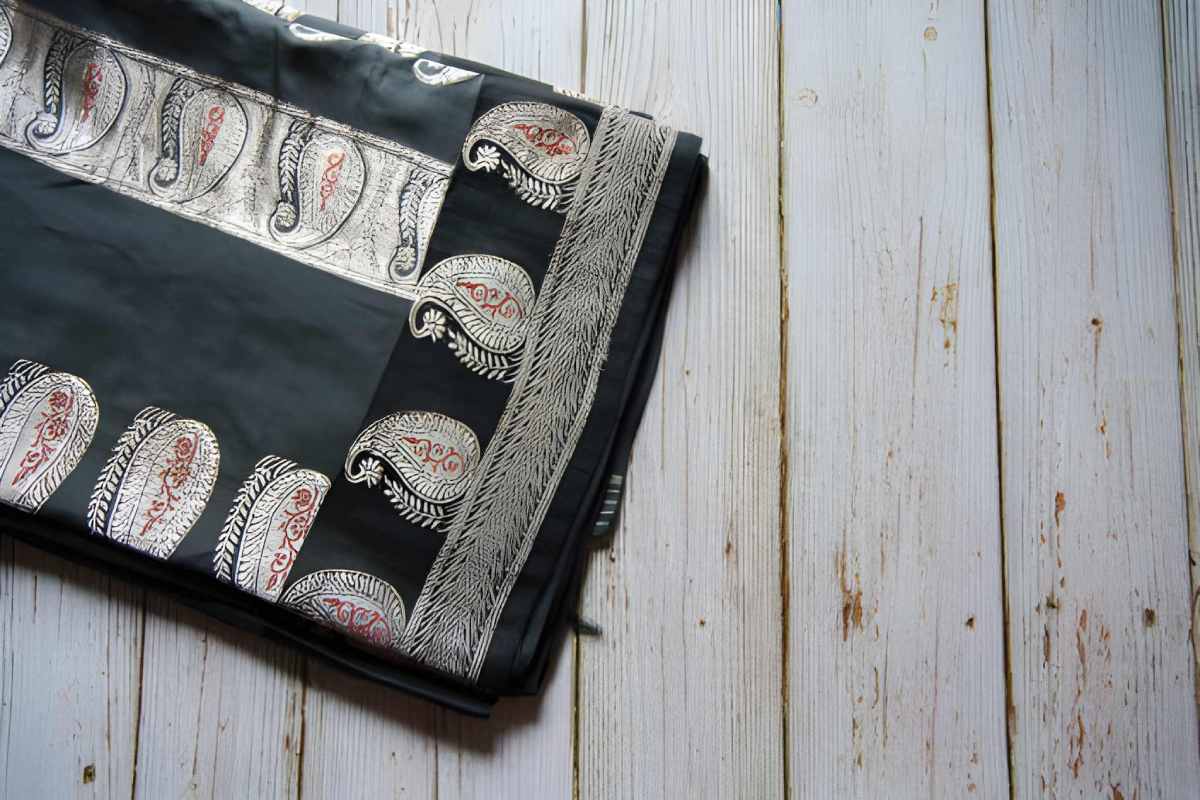
JDS Banaras (Jagdish Das & Co) is one of Varanasi’s oldest Banarasi saree houses, with roots dating back to 1913 and a reputation as a manufacturer, wholesaler, and retailer for both local buyers and over 3,000+ retail brands across India. The brand is known for pure handloom Banarasi sarees—especially Katan silk, organza (kora), georgette, tissue, and heavy bridal zari pieces—along with suits, lehengas, and dupattas.
When you pay for a JDS Banaras saree, you are rarely paying for a logo alone. You are paying for the design archive, the way master weavers are allocated to complex work, and the insistence on traditional weaving methods that keep the sarees closer to heritage craft than to mass‑produced, powerloom banarasis.
Table of Contents
Price bands: what JDS sarees usually cost (and why)
Exact MRPs will vary by collection and zari content, but JDS sits firmly in the “authentic, mid‑to‑high” Banarasi segment rather than the bargain, blended‑fabric end. To orient expectations, it helps to look at how serious Banarasi sellers price similar sarees:
- Original Banarasi sarees in the wider market range roughly from around ₹3,000 for blended/synthetic and simple designs up to ₹3,00,000+ for pure‑silk, heavy handloom heirloom pieces.
- Pure silk Banarasi sarees at reputable stores commonly start around ₹12,000–₹15,000 and can exceed ₹1,00,000 as weave complexity, zari, and handloom work rise.
Positioning JDS within this landscape, you can think in three broad tiers.
1. Foundation tier (approx. ₹15,000–₹30,000)
- What this typically includes
- Pure or high‑quality silk bases like lighter Katan, organza, or georgette with simpler buti layouts or restrained borders.
- Moderate weave density, relatively forgiving designs, and tested or lighter zari work rather than fully heavy, all‑over patterns.
- What decisions keep the price here
- Fewer motif transitions per repeat, so the loom runs with fewer interruptions.
- Mid‑tier weavers working on repeatable, low‑risk layouts with good training but less extreme complexity.
- Zari kept to key borders and pallus instead of dense all‑over jaal.
- Best for
- Buyers who want an authentic JDS Banarasi saree for festivals, office events, and repeat wear without moving into bridal budgets.
2. Signature tier (approx. ₹30,000–₹70,000)
- What this typically includes
- Richer pure Katan silk, organza, or soft silk bases with more detailed jaal, shikargah, brocade, or complex borders.
- Clearly handloom‑heavy execution where the reverse shows the floating threads and minor irregularities characteristic of real weaving, not printed or powerloom fabric.
- Denser zari usage—often tested or premium zari—with more precise patterning.
- What decisions push costs up
- Higher ends and picks per inch (EPI/PPI), which slow weaving speed and increase yarn breakage.
- More intricate motif architecture (continuous jaal, complex pallus) requiring repeated loom stops and checks to keep alignment true.
- Allocation to more senior weavers, because a single mistake in a dense jaal might require discarding or reworking a large section.
- Best for
- Close‑family weddings, engagement and reception sarees, trousseau building, and anyone who wants visible richness with robust wearability.
3. Heirloom tier (often ₹70,000–₹1,50,000+ depending on zari)
- What this typically includes
- Master‑level kadhua, kadhiyal, heavy jangla, or heritage motifs revived from old archives, often in pure Katan with substantial weight.
- Either extensive real/pure or high‑grade tested zari usage or extremely fine zari work that demands high control.
- Warp‑planned constructions like rangkat or complex multi‑colour arrangements where errors in the planning phase can force complete warp discard.
- What decisions create this band
- Many more loom hours per saree—some heavy Banarasi pieces can take several weeks of dedicated weaving, especially with slow handloom output for complex designs.
- Highest‑tier weavers and supervisors, because failure risk is high and correction options are limited once the warp is dressed.
- Rare or custom colourways and motifs that are not mass‑produced, which spreads design and sampling cost across fewer pieces.
- Best for
- Bridal main events, heirloom gifting, and collectors who care as much about the reverse side and motif structure as the front look.
These bands are indicative and based on how similar pure‑silk Banarasi sarees are priced at established houses; they help you interpret why a particular JDS saree might sit in one band or edge into another.
Why “pure silk” alone doesn’t explain JDS pricing
Most price guides say: pure silk + real zari + handloom = expensive, which is directionally true but incomplete. Once you’re already inside a store like JDS that is known for pure silk Banarasi and authentic craft, price differences of ₹30,000–₹60,000 between apparently similar sarees usually come from how that silk is used, not just what silk it is.
Materials still matter
- Pure mulberry silk is more expensive and more durable than blended or synthetic substitutes, and most reputable brands clearly separate pure‑silk Banarasis from blended or “art silk” options.
- Pure or high‑grade tested zari with real gold/silver content costs significantly more per gram than synthetic, plastic‑coated, or lurex‑type threads.
But within the pure‑silk, high‑craft bracket that JDS focuses on, materials are the starting line, not the finish line.
Decisions that matter more once quality is “baseline high”
- Weave density
- Higher ends and picks per inch create richer drape, better fall, and greater durability but can slow production dramatically; handloom guides note that complex Banarasi weaves may produce only fractions of a meter per day.
- Motif architecture
- Buti‑based layouts allow faster, more forgiving weaving; continuous jaal, shikargah, or rangkat arrangements demand constant attention, more counting, and higher risk of misalignment.
- Zari handling complexity
- Finer zari or dense zari fields increase friction and require more precise hand control, slowing the weaver even if the zari type is the same on two labels.
- Weaver skill allocation
- Senior weavers are reserved for dense, complex sarees because they prevent expensive mistakes and reweaves, not because they simply work faster.
This is why two JDS Banaras sarees photographed side by side, both labelled pure silk with zari work, can have a price gap big enough to surprise first‑time buyers.
Reading the loom: how to tell why one JDS saree costs more than another
Instead of relying on labels and heavy marketing words, learn to “read” what the loom had to go through for that saree.
What the camera hides
On product pages and Instagram, shoppers often see:
- Similar colour palettes
- Related motif styles (e.g., floral jaal, traditional borders)
- Identical “pure silk Banarasi” labels
But the loom might have faced:
- Different weave densities (one saree uses a denser grid that takes much longer to fill).
- Different motif transitions (one has a more complex repeat that forces frequent shuttle changes).
- Different zari finesse (one uses finer, trickier zari that slows weaving).
- Different weaver tiers and supervision intensity.
These factors don’t show clearly in a flat photograph but translate directly into time, risk, and labour cost.
Practical ways to compare two JDS sarees
When you have two JDS sarees in front of you—physically or via detailed video—focus on:
- Weight and handfeel
- Without being stiff, does the fabric feel denser and “fuller” in the hand compared with another of the same silk type? Denser sarees usually require more time on the loom.
- Reverse side inspection
- Check the back for floating threads, neatness, and how often colours or zari start and stop; more intricate backs often mean more complex front‑side work.
- Motif detail
- Look at how many different elements appear in one repeat (borders, inner motifs, background textures). More elements generally mean more loom operations.
- Salesperson explanations
- Ask for weave density comparisons, time taken, and weaver allocation—not just “this is heavy work.” Clear, specific answers are a strong signal of real craftsmanship.
JDS Banaras: process, transparency, and value logic
Most generic Banarasi content leans on words like “royal,” “regal,” and “timeless,” but serious buyers care more about process than poetry. JDS can—and should—lean into process transparency as a value signal.
How JDS thinks about “value” internally?
While not every internal metric is public, a rational way to frame JDS pricing is by three axes:
- Complexity tier
- From straightforward buti and border sarees to dense jaal and archival motifs that demand senior weavers and slower output.
- Wearability tier
- From soft, lighter sarees designed for frequent wear to heavily worked ceremonial sarees that trade some comfort for visual impact.
- Longevity expectation
- From sarees designed for 10–20 wears over years to pieces intended as heirlooms, where structural integrity, finishing, and timeless motifs matter more than trend.
For a buyer, the goal is not to chase the highest price but to pick the complexity–wearability–longevity combination that fits their real life.
Why transparency itself has value
Because JDS is a long‑standing manufacturer as well as a retailer, staff can usually answer detailed questions about warp planning, zari types, weave density, and weaver involvement in a way multi‑brand shops often cannot. That operational clarity reduces your risk of overpaying for buzzwords and is part of what you pay for when you choose a heritage house over anonymous marketplaces.
How to choose the right JDS Banaras saree for your budget and event?
Generic “how to buy a Banarasi” guides usually say “set a budget, choose fabric, buy from a trusted seller,” which is helpful but shallow. Below are concrete, JDS‑relevant scenarios that map budgets to loom decisions.
Under ~₹25,000 – repeat‑wear, authentic JDS
- Good fit if:
- You want a saree you will wear multiple times a year for festivals, pujas, office events, or family gatherings.
- What to look for:
- Pure or high‑quality silk or organza with simpler motifs and borders.
- Moderate zari work you won’t be afraid to wear and re‑wear.
- Questions to ask JDS:
- “How does this weave density compare to your heavier Katan bridal pieces?”
- “Is the zari tested or synthetic, and how will it age with repeated wear?”
₹30,000–₹60,000 – Serious occasion and trousseau
- Good fit if:
- You are buying for a close family wedding, your own smaller function, or building a long‑term wardrobe.
- What to look for:
- Pure Katan, organza, or rich soft silk with noticeable jaal or border complexity.
- Handloom indicators on the reverse, and comfortable but substantial weight.
- Questions to ask JDS:
- “Approximately how many days did this saree take to weave?”
- “Which weaver tier worked on this piece and why?”
- “What are the typical care instructions to preserve the zari and fall?”
Under ₹70,000+ – Bridal Main Event or Heirloom
- Good fit if:
- You want your primary wedding saree or a piece to pass down.
- What to look for:
- Master‑level motifs (jangla, shikargah, dense kadhua) and richly detailed pallus and borders.
- Either very fine, subtle zari work or visibly heavy zari that still feels balanced, not stiff.
- Questions to ask JDS:
- “What is special about this design compared to your regular bridal range?”
- “How is the zari composed, and is this pure or high‑grade tested?”
- “Have similar pieces been in your collection for years, and how have they aged for customers?”
This scenario‑based approach makes abstract weaving decisions concrete in the context of your actual budget and event.
Frequently asked questions about JDS Banaras saree pricing
1. Are all JDS Banaras sarees pure handloom and pure silk?
JDS positions itself as a traditional, pure‑handloom Banarasi house, and multiple listings and reviews describe their sarees as authentic, handwoven pieces in pure Katan, organza, georgette, and other established Banarasi weaves. However, like most large manufacturers, collections can include different fabric weights and constructions, so always ask whether a specific saree is pure silk handloom or a different base.
2. Why do JDS sarees sometimes seem pricier than online “Banarasi” deals?
Many low‑priced “Banarasi sarees” online are machine‑made, printed, or woven with synthetic fibres and low‑grade zari; they look similar in photos but use cheaper materials and require far fewer artisan hours. JDS sarees generally sit in the authentic, pure‑silk, handloom‑heavy bracket, which naturally commands higher prices aligned with quality and time.
3. Does a higher price at JDS always mean better silk?
Above a certain baseline, higher prices mostly reflect greater weaving complexity, denser motifs, riskier techniques, and more senior weavers—not just “better” silk. You can often find two sarees in similar silk grades where the more complex jaal or heritage design costs dramatically more due to loom hours and failure risk.
4. How can I verify authenticity when buying a JDS saree?
Look for Silk Mark or similar certification on pure‑silk pieces, inspect the reverse for handloom characteristics, and ask detailed questions about fabric, zari type, and weave time; reputable brands and stores are transparent on these points. Checking independent reviews and long‑term customer feedback for JDS also reinforces trust in both product and after‑sales support.
5. Is paying extra for an heirloom‑tier JDS saree worth it?
If you value heritage designs, long‑term structural integrity, and the ability to pass a saree down, investing in higher complexity and better finishing often pays off over decades of careful use, especially compared with frequently replacing lower‑quality pieces. Furthermore, if your priority is frequent wear without anxiety, a solid mid‑range JDS saree might offer better day‑to‑day value.
If you treat JDS Banaras saree pricing as a window into the loom rather than a mystery markup, you gain two advantages: you stop over‑weighting buzzwords like “pure silk,” and you start asking the exact questions that separate a genuinely well‑priced JDS saree from something that merely looks impressive on a hanger.
