

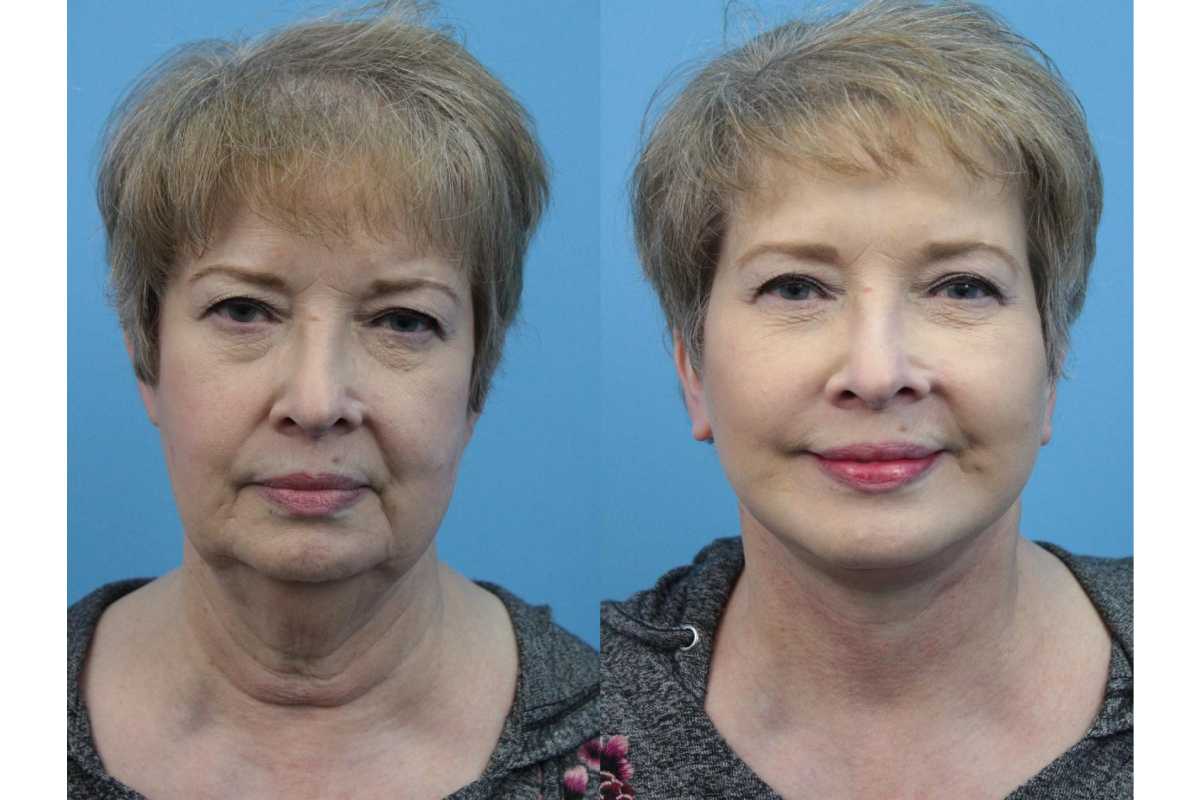
So how do you decide on a mini lift vs. A full lift? It’s not only the cost-it’s really about what type of aging you have, how much time you have off for recovery and how dramatic of a result do you desire. Some people only want to look rested and refreshed and not changed, whereas others have sagging jowls, deep creases and lack of facial support and require a more definitive fix.
Both can be fantastic but they address different needs. Basically, a mini facelift usually involves less surgery, more in early aging stages, while a full facelift is more of a complete surgical rejuvenation to the entire face with greater laxity. You have to ask what is best for your face, your expectations, and your surgeon.
Table of Contents
What Is a Mini Facelift?
The mini facelift is a less comprehensive form of facial rejuvenation, the primary focus being on the lower face – more particularly the jawline and early jowling. Incisions are smaller and surgery is shorter than in traditional facelifts, the surgeon will in many circumstances lift and support the deeper layer of facial tissue rather than just the skin.
This procedure will tend to be favored by those patients who are starting to observe the early stages of mid to moderate jowling but do not yet warrant the need for more significant surgery. The result will be natural and refreshed rather than significantly changed.
What Is a Full Facelift?
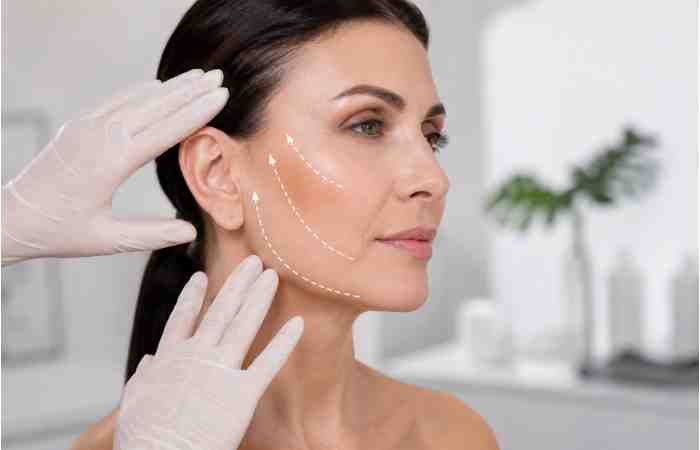
A full facelift- also sometimes referred to as a traditional facelift – is a more involved procedure. It’s best suited for correcting a moderate amount of laxity in the face. It will correct drooping in the cheeks, jowl, and lower face and possibly in the neck as well. A full facelift will more often than not involve longer incisions and reposition of the tissues of the face in a more thorough manner.
The traditional full facelift is generally best for individuals who have a more considerable amount of facial laxity, more apparent fold, and changes related to aging throughout a number of different parts of the face.
Mini vs Full Facelift: Side-by-Side Comparison
| Feature | Mini Facelift | Full Facelift |
| Main purpose | Mild to moderate lower-face rejuvenation | More complete facial rejuvenation |
| Areas treated | Jawline, early jowls, slight sagging | Cheeks, jowls, jawline, sometimes neck |
| Incision size | Smaller | Longer and more extensive |
| Surgery time | Usually shorter | Usually longer |
| Downtime | Less | More |
| Results | Subtle, natural refresh | More dramatic and comprehensive |
| Longevity | Good, but generally less long-lasting than a full facelift | Often longer-lasting |
| Best for | Early aging signs | Advanced sagging and deeper folds |
| Cost | Usually lower | Usually higher |
It’s not so much what the volume of lift is, it’s what area of the face is being worked on. With a mini facelift you look refreshed, with a full facelift, you look substantially younger.
Cost: What You Can Expect
People are always the first to inquire about the cost, and it’s no wonder why. In a mini facelift, the cost tends to be lower because there is more minimal surgical time and less comprehensive work being done. More of the cost of a full facelift can be attributed to more surgery, more operative time, and perhaps more extensive work on repositioning tissue.
That said, the final price depends on several factors:
| Cost Factor | Why It Matters |
| Surgeon’s experience | Highly experienced surgeons often charge more |
| Geographic location | Prices vary by city and region |
| Facility fees | Operating room and anesthesia costs add to the total |
| Procedure complexity | More correction usually means higher cost |
| Add-on procedures | Neck lift, eyelid surgery, or fat transfer can increase the total |
Instead of just selecting it because it’s cheapest, consider getting a deal. A cheaper surgery that isn’t right for your situation could lead to dissatisfaction. Actually, the “right” surgery the first time around could be more economical.
Results: What Kind of Improvement Each One Offers
Mini Facelift Results
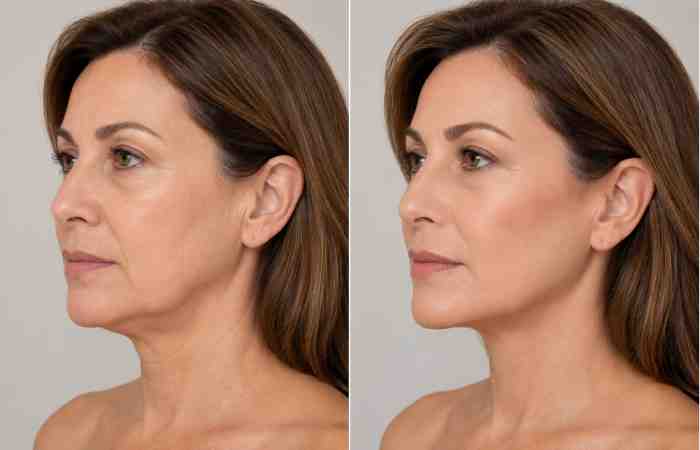
Generally, a mini facelift results in a softer, fresher appearance. It can reduce drooping jowls, firm the lower face, and can sculpt the jawline. Due to it being less of a procedure, the look it provides tends to be more natural and subtle.
This procedure is ideal for people who want others to notice they look good, but not necessarily know why. It is often described as a “refresher” rather than a transformation.
Full Facelift Results
A full facelift provides broader and more noticeable improvement. The surgery addresses laxity in the cheeks, jaw and lower face, as well as potentially in the neck if this is incorporated into the operation. The change is often quite striking and the improvement more dramatic and enduring than in a mini facelift.
People generally have a full facelift operation when they feel their face is ageing in a number of different places and they wish to “have a more significant reset”.
Result Comparison Table
| Result Aspect | Mini Facelift | Full Facelift |
| Improvement level | Mild to moderate | Moderate to significant |
| Natural appearance | Very natural | Natural when done well, but more noticeable change |
| Jawline definition | Improved | Strongly improved |
| Cheek lift | Limited | Better correction |
| Neck improvement | Limited or none | Often improved |
| Overall change | Subtle refresh | A more complete regeneration. |
Recovery: How Long It Takes to Heal
Recovery is another major difference between the two procedures. A mini facelift usually has a shorter and easier recovery because it is less invasive. A full facelift takes longer to heal because the surgery is more extensive.
Mini Facelift Recovery
Most of those who undergo a mini facelift will experience some swelling, bruising, and slight tightness for a temporary period. Most people resume normal activities and socialising faster than following a standard facelift and light work may be possible within one to two weeks, depending on how they recover and what their job entails.
Full Facelift Recovery
Majority of those people going through the procedure of mini-facelift will suffer from slight temporary swelling, bruising and a little tightness. Majority can resume back to routine and going out much faster than following a facelift and light work can be done within one to two weeks according to their recovery process and the job they do.
Recovery Comparison Table
| Recovery Factor | Mini Facelift | Full Facelift |
| Swelling | Mild to moderate | Moderate to significant |
| Bruising | Less | More |
| Return to work | Often sooner | Usually later |
| Return to social activities | Faster | Slower |
| Final result visibility | Quicker | Takes longer to settle |
| Total healing time | Shorter | Longer |
Pros and Cons
Mini Facelift Pros
- Smaller incisions
- Shorter surgery and recovery
- Lower cost
- Natural-looking improvement
- Good for early aging
Mini Facelift Cons
- Less dramatic results
- Not ideal for advanced sagging
- May not address the neck well
- Results may not last as long as a full facelift
Full Facelift Pros
- More comprehensive improvement
- Better for deeper sagging and folds
- Can reshape the jawline and lower face more effectively
- Often longer-lasting results
Full Facelift Cons
- Higher cost
- Longer recovery
- More swelling and bruising
- More extensive surgery
Who Is a Good Candidate?
The right patient is the one whose problems are treated by the procedure. This is where most people are making the assumption that a mini facelift is a cheaper form of a full facelift. It’s not. It’s a different procedure.
Mini Facelift Candidacy
A mini facelift may be a good fit if you:
- Have early signs of aging
- Notice mild jowling or softening of the jawline
- Want a subtle, natural improvement
- Prefer less downtime
- Do not need major neck correction
- Want a more conservative approach
Full Facelift Candidacy
A full facelift may be a better choice if you:
- Have moderate to significant sagging
- See deeper folds and more advanced jowls
- Want a more noticeable improvement
- Need correction in several areas of the face
- Are comfortable with a longer recovery
- Want more lasting structural change
Candidacy Comparison Table
| Candidate Factor | Mini Facelift | Full Facelift |
| Early aging signs | Excellent fit | May be more than needed |
| Moderate sagging | Sometimes suitable | Stronger choice |
| Advanced aging | Usually not enough | Better fit |
| Minimal downtime desired | Yes | Less ideal |
| Stronger transformation desired | Limited | Yes |
| Neck concerns | Limited | Better option |
Which One Lasts Longer?
Overall, a traditional facelift will tend to last a bit longer, as it deals with deeper support tissues and has addressed more pronounced aging. While a mini facelift is capable of giving very effective and long-lasting improvement in the correct candidate, it is typically better suited for more initial changes rather than a significant facial looseness.
Longevity will vary depending on a patient’s age, the quality of their skin, their lifestyle, sun exposure, and post-operative care. No facelift permanently stops the aging process; it simply sets back the aging process.
How to Choose the Right Procedure
Often, it comes down to asking three questions:
- To what extent are you addressing the aging?
- How much downtime are you capable of having?
Do you want fine-tuning or a significant transformation?
If you are primarily concerned about mild jowling or early droop, you might only need a mini-lift. For more significant droop or a greater, longer-term impact, a full facelift is typically the better option..
A good surgeon will not simply recommend the more expensive option. They will look at your anatomy, your skin quality, and your goals, then suggest the procedure that matches your face rather than your budget alone.
Final Thoughts
While mini facelifts have value, they are for different reasons. Mini facelifts are “less invasive procedures offering “lift and tighten” of some of the jowls, jaw line, and nasolabial folds” are designed for a patient desiring an “over all younger look” with less healing time. Full facelifts are a “comprehensive treatment” designed for patients desiring an “over all correction”.