


Potato for Armpit Whitening: Ever wonder whether rubbing a potato on your underarms will make them light? It is actually a raw potato, so they will not be light. Surely you are not one alone, the notion is universal: I would also take you through what makes underarms dark, what potatoes may not (you want to know why that is mostly anecdotal), safe home remedies that can be used to see whether you would like to, expectations, and when to visit a professional. None of your snake-oil stuff, pure down to earth.
Table of Contents
Why do underarms get darker?
Darkening of the axillae (armpits) — medically “axillary hyperpigmentation” — has many causes:
- Friction (tight clothing, rubbing) and shaving/ingrown hairs → irritation → post-inflammatory hyperpigmentation.
- Product buildup (deodorants/antiperspirants) and dead skin accumulation.
- Skin conditions such as acanthosis nigricans (velvety dark patches often linked to insulin resistance), fungal infections, or dermatitis. If the skin is thick/velvety or changes quickly, get medical advice.
Why this matters: if the cause is medical (e.g., acanthosis nigricans), topical kitchen hacks may do very little until the underlying issue is addressed.
Does Potato for Armpit Whitening Really Work?
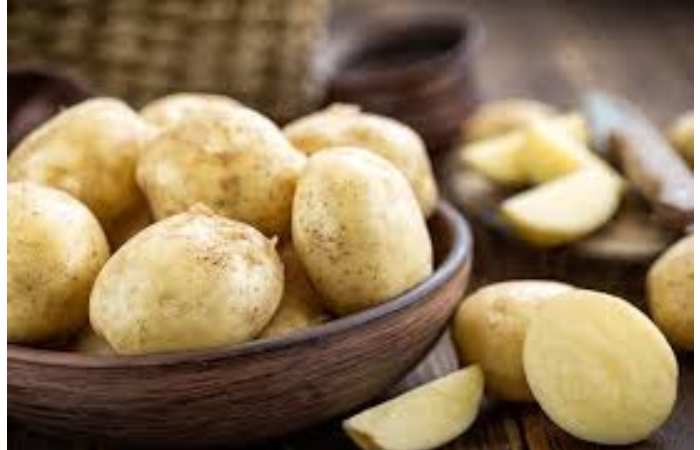
Well, shall we be truthful to ourselves on this point? It will assist to some extent, but is not a wonder-working drug.
You have likely watched videos where a person rubs a slice of potato on their face and in a week, their armpits have been made 3 tones lighter. As a matter of fact, real life is hardly as dramatic.
Why People Think It Works
Raw potato contains:
- Vitamin C – known to support brighter-looking skin
- Mild natural enzymes – may help very gentle exfoliation
- Starch – can smooth and soften skin surface
Because of this, some people notice:
- Slight brightening
- Reduced dullness
- Softer texture
But this improvement is usually mild and gradual, not dramatic.
What Science Says
There is no strong clinical evidence proving that potato juice significantly lightens underarm pigmentation.
Dermatologists generally agree:
- It may help with surface dullness
- It will NOT treat deep pigmentation
- It won’t fix medical causes like Acanthosis nigricans
If your dark underarms are caused by:
- Friction
- Shaving irritation
- Mild product buildup
You might see a small improvement.
If they’re caused by:
- Hormonal imbalance
- Insulin resistance
- Genetic pigmentation
Potato alone won’t solve it.
How potato might work (plausible mechanisms)
- Mild chemical exfoliation — potato juice contains mild acids and enzymes that can slough dead cells, making skin appear lighter temporarily.
- Vitamin C — Potatoes have some vitamin C, which is an antioxidant that can interfere with melanin formation (in theory). The amount in a raw potato is small compared to cosmetic vitamin C serums.
- Moisture & starch — the starchy juice may soothe and smooth surface texture, reducing shadowing and the look of darkness.
- Placebo and regular care — doing any gentle treatment, avoiding harsh scrubbing, improving shaving technique, or switching deodorant may improve appearance — and you’ll attribute that improvement to the potato.
Safe potato recipes you can try
Before you start: do a patch test: put a little potato juice on the inner arm for 24 hours. If there’s redness, stinging, swelling or rash — don’t use it. Avoid potato + lemon if you have sensitive/thin underarm skin.
| Recipe | Ingredients | How to use | Frequency | Best for |
| Simple potato juice | 1 small raw potato | Grate, squeeze juice, apply with cotton to clean underarm, leave 10–15 min, rinse | 3–4×/week | Sensitive skin (gentle) |
| Potato slice rub | 1 peeled potato | Slice and rub cut surface on underarm for 5–10 min; let dry, rinse | Daily or every other day | Quick, low-effort |
| Potato + aloe | 2 tbsp potato juice + 1 tbsp aloe gel | Mix, apply 10–15 min, rinse | 3×/week | Dry or irritated skin |
| Potato + yogurt (mild exfoliant) | 2 tbsp potato puree + 1 tbsp plain yogurt | Apply as paste, gentle circular massage 1–2 min, leave 10 min, rinse | 2–3×/week | Normal skin (gentle lactic acid) |
| Potato + cautionary lemon (use only if not sensitive) | 2 tbsp potato juice + 1 tsp diluted lemon juice | Apply max 5–8 min, rinse thoroughly. Stop if stings. | 1–2×/week | Not for sensitive/thin skin; avoid sun after use |
(Recipes adapted from commonly circulated home-remedy methods; none are clinically validated.)
Step-by-step: how to do the “potato juice” method safely
- Wash and dry underarms.
- Peel and grate one small potato, wrap grated pulp in muslin or a clean cloth and squeeze to extract juice.
- Using a cotton pad, apply juice to armpit skin.
- Leave on 10–15 minutes (or less if you feel tingling). Rinse gently.
- Pat dry, apply a gentle fragrance-free moisturizer.
- Always do a small patch test (inner elbow) before first full application. If irritation occurs, stop and consult a dermatologist.
How long until you see anything?
- A general effect is always quite mild and gradual: subtle changes of several weeks of regular use (2-8 weeks).
- In case of deeper pigmentation or other medical conditions, such as acanthosis nigricans, kitchen remedies would not have much impact at all, and those ailments would require a doctor visit and medical intervention.
Risks, side effects & when to stop
- Irritation or allergic reaction: potato proteins can cause reactions in some people (rare). Stop immediately if redness, burning, swelling, blisters, or intense itching occur.
- Photosensitivity risk if you mix potato with acidic ingredients (lemon) — avoid sun/heat exposure afterwards and don’t use before sun exposure.
- Masking a medical issue: if darkening is thick/velvety, spreading, itchy, or sudden — see a doctor to rule out acanthosis nigricans, tinea versicolor, or other causes.
Table: Pros vs. Cons of Trying Potato Hacks
| Pros | Cons |
| Cheap, accessible, and low-tech | Limited clinical proof — mostly anecdotal |
| Generally gentle (if used alone) | Possible irritation or allergy in some people |
| Encourages gentle care (less scrubbing) | May delay proper diagnosis if a medical cause exists |
| Can be combined with better shaving/deodorant habits | Not a substitute for proven medical treatments for severe hyperpigmentation |
When to skip home remedies and see a Dermatologist
- Over-the-counter or home remedies don’t improve it after a few months
- Skin is thick, velvety, rapidly changing, or painful.
- You have risk factors for insulin resistance/diabetes and notice acanthosis-type changes.
- You want faster, reliable results; dermatologists can offer topical agents (e.g., azelaic acid, tranexamic acid, prescription retinoids, or professional peels) that have evidence and regulated dosing.
Realistic alternatives with stronger evidence
If potato experiments don’t cut it, evidence-backed approaches include:
- Gentle chemical exfoliants: topical azelaic acid, mild glycolic/salicylic acid products (use under guidance).
- Topical brighteners: azelaic acid, kojic acid, tranexamic acid (and in some places hydroquinone under supervision).
- Addressing the cause: if acanthosis nigricans is suspected, evaluate for insulin resistance/diabetes and manage underlying issues.
- Procedures: in-clinic chemical peels, laser or microneedling — consult a dermatologist for suitability.
(These options have stronger clinical support than potato juice. A dermatologist can pick the right mix for your skin type.)
FAQs
1. Will potato forever take away the dark armpits?
The improvement will always be slight and temporary, but in case of the changes of pigment, that will be permanent, and will normally require specific medical interventions.
2. Is it possible to combine potato with lemon to achieve better results?
Lemon is bitter and may cause irritation on thin underarm skin. When you use it, do it diluted, spend only a short time in contact, and patch-test it. Would not take if you have sensitive skin.
3. More dangerous than the chemical peels is the potato, or vice versa?
Potatoes are less aggressive and less efficient. The chemical peels/drugs are more intense and must be applied with the help of a professional.
About Potato & Natural Remedies
Healthline: Natural ways to lighten underarms (incl. potato) – Healthline (mentions potato and other natural options)
Fact check on potato & pigmentation claims – Medical Dialogues (clarifies potato claims and limitations)
Final thoughts
Potato is a cheap, low-risk home test that may cause slight brightening in some individuals, likely through the exfoliation process, vitamin C, and better skin-care practices. Nonetheless, it is not a magic pill, and its scientific evidence is shallow. A warning, patch test, and the sudden darkening of your underarm may be important, especially when the area is thick/velvet-y-bothersome with precaution, and in which case, get to a dermatologist, as at times, the skin is about to explain something significant to your general well-being.
